
Symptoms and consequences of endometriosis
For most women, the symptoms of endometriosis are not experienced until the first menstrual period and for many, the symptoms stop when the woman enters menopause. Unfortunately, for some, the problems continue even after menopause, which can be due to sensitization of the nervous system. You will learn more about this issue in session 2 on pain.
There is not always a correlation between the severity of endometriosis and the symptoms experienced. Some women with moderate to severe endometriosis may not have experienced any symptoms at all but are diagnosed by chance during surgery for other reasons or while undergoing infertility treatment. Conversely, other women may have many pain symptoms even though they have very mild endometriosis.
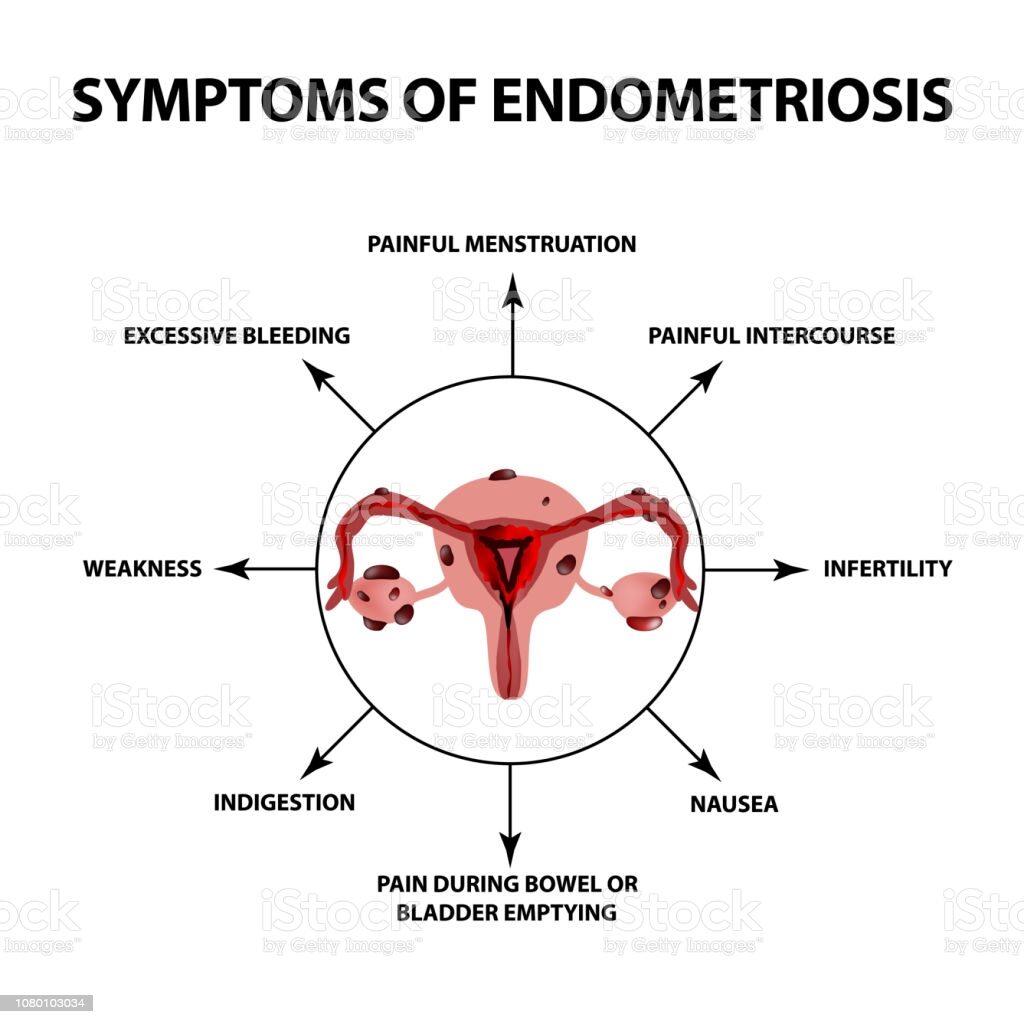
Common menstrual pain
Pain during menstruation is caused by contractions in the uterine musculature. They occur because of hormonal changes in the days leading up to the start of your period. The pain typically lasts 2-3 days and is uncomfortable for most women. The hormonal changes can also cause nausea, vomiting, diarrhea, and headaches during menstruation in some women.
Menstrual pain is completely normal and is not in itself a sign of endometriosis. Most women with endometriosis report that they have experienced severe menstrual pain during their teenage years, but that the pain is difficult to distinguish from menstrual pain in women without endometriosis, as it is normal to have mild to moderate menstrual pain.

Abdominal pain
One of the most common symptoms of endometriosis is abdominal pain. Initially, this starts out as severe menstrual pain but gradually develops into pain between periods as well. Abdominal pain symptoms can be non-specific or more specific symptoms such as pain during intercourse, pain during urination, or pain during bowel movements.
Many women also develop painful muscle tension in the lower abdomen because of endometriosis-related pain.
Endometriosis-related pain is caused by various factors including bleeding in the abdominal cavity and adhesions between organs, but there is also an effect on the nerves in the abdominal cavity that can cause pain. You will learn more about the pain mechanisms of endometriosis in session 2 of the program.
Gastrointestinal problems
Many women with endometriosis also experience gastrointestinal problems. These can include abdominal pain, bloating, increased gas, diarrhea, constipation, and pain during bowel movements.
Many of the symptoms are similar to those of irritable bowel syndrome (IBS) and the high overlap in symptoms between the two conditions can make it difficult to distinguish between them, both for the woman herself and for healthcare professionals. This may be the reason why so many women with endometriosis are initially either misdiagnosed or diagnosed very late.

Recent research suggests that endometriosis may be the cause of gastrointestinal problems. This is because endometriosis tissue can affect and alter the nervous system in the abdominal cavity, triggering reflexes that affect bowel function and pain threshold.
A Danish study has shown that women with endometriosis are 5 times more likely to fulfill the diagnostic criteria for IBS than women without endometriosis and that the prevalence of gastrointestinal problems is independent of the location of the endometriosis in the abdominal cavity.
It can be difficult to distinguish between endometriosis-related gastrointestinal problems and IBS-related gastrointestinal problems, and in reality, they may be two sides of the same coin. So, if you suffer from endometriosis and are experiencing troublesome gastrointestinal issues, a change in diet and lifestyle can be crucial for an overall improvement in your symptoms and quality of life. You will have the opportunity to delve deeper into an endometriosis-friendly diet, exercise, and health a little later in the program (session 8).
Fertility problems
Infertility is a common side effect of endometriosis. This is not only because sperm and egg cannot come into contact with each other due to adhesions, but also because the endometriosis tissue secretes substances that make it difficult for the sperm to fertilize the egg and difficult for a fertilized egg to attach.
Fatigue
In addition to pain, most girls and women with endometriosis experience fatigue and a lack of energy in everyday life. Fatigue and exhaustion are characteristic of chronic diseases affecting the internal organs in the abdominal cavity and can be caused by poor sleep quality triggered by the pain.
However, some find that fatigue and exhaustion persist despite improvement in pain symptoms, and studies have shown that it is endometriosis itself - rather than pain - that is associated with fatigue and exhaustion.
Fatigue and exhaustion in women with endometriosis have been associated with difficulties falling asleep, pain, depression, and work-related stress. A large Danish study has shown that feeling tired and exhausted is the biggest risk factor for poor work performance among women with endometriosis - even a bigger risk factor than pain.

Still not much is known about the causes of fatigue and exhaustion in endometriosis. Some researchers suggest that chronic inflammation and the corresponding activation of the immune system may be part of the explanation, along with increased and, for some, even chronically increased stress levels.
When you're tired and sleep poorly, your mind often starts racing. This can turn into a vicious spiral where thoughts and worries about not sleeping lead to more anxiety and insomnia. Eventually, the struggle to fall asleep can become the problem itself.
The different mindfulness and acceptance techniques you will work with throughout this program can also be used to manage fatigue, exhaustion, and sleep problems.
Psychological and social repercussions
It can be challenging for both the woman and her relatives to talk to friends, family, or colleagues about pelvic pain and menstrual problems. The condition can be difficult to explain and talk about with those who don't know about it. This is not only because it is located in the pelvis and is "invisible" to others, but also because it is associated with many taboos. Most people find it much easier to explain a broken leg or a disease like diabetes or cardiovascular disease, as these are diseases that most people are familiar with.
Endometriosis, on the other hand, is a "woman's problem" that doesn't go away after 6 weeks in a plaster cast or the right medication. Endometriosis is a chronic disease that in some cases will follow the woman for the rest of her life in one form or another.
Living with endometriosis has been shown to be associated with several negative psychological and social consequences. The effects can be so severe that they are experienced as more debilitating than the physical pain symptoms.
Below are examples of the side effects that in some cases can affect and limit the daily life of patients with endometriosis. The effects can be:
• Physical limitations and difficulty performing everyday tasks and activities
• Reduced activity level
• Sleep problems, fatigue, lack of energy, and exhaustion
•Difficulty concentrating and remembering
• Stress
• Low mood or depression
• Anger, guilt, or shame
• Worry, catastrophizing, and anxiety
• Sadness
• A sense of meaninglessness
• Identity confusion, who am I? What can I do? What do I want to do with my life?
• Reduced ability to work
• Financial and social problems
• Problems with family, friends, children, partner, and sexual life
• Generally reduced quality of life

