
Stress management overview
Only after having identified in what way and to what extent stress affects you, you will be able to manage stress in the right way. The degree of stress and how it is expressed needs to be taken into account. Some people are 'hyped up' and can't calm down, while others are depressed and numb. Some are more affected inside the body systems and bodily sensations, while others feel more affected emotionally or in the mind, thoughts, and concentration.
When you look at the stress management chart for a moment, it does not mean that you have to do everything, but instead that you should start where it feels most logical and manageable in relation to your particular stress state.
Every human being consists of an interconnected body system, which means that when you make an effort in one part of the system, the rest of it is also affected. That is why we apply stress management where the least amount of effort is likely to have the greatest effect.
The important thing is now: One thing at a time and accepting that it can be difficult to change old habits. It takes time (and repetition), and a high degree of self-care, inclusiveness, and patience is absolutely necessary!
In the following, we will ask you to start by filling in the "Stress Management" sheet. Below we describe point by point how to fill in the worksheet. You can download the worksheet here:
1. Position on the stress continuum
Try to start by assessing where you are on the stress continuum from health to illness. How stressed are you? Are you stressed to a degree where you still have your free will, or are you so far gone that you need to do something radical to make a turn-around?
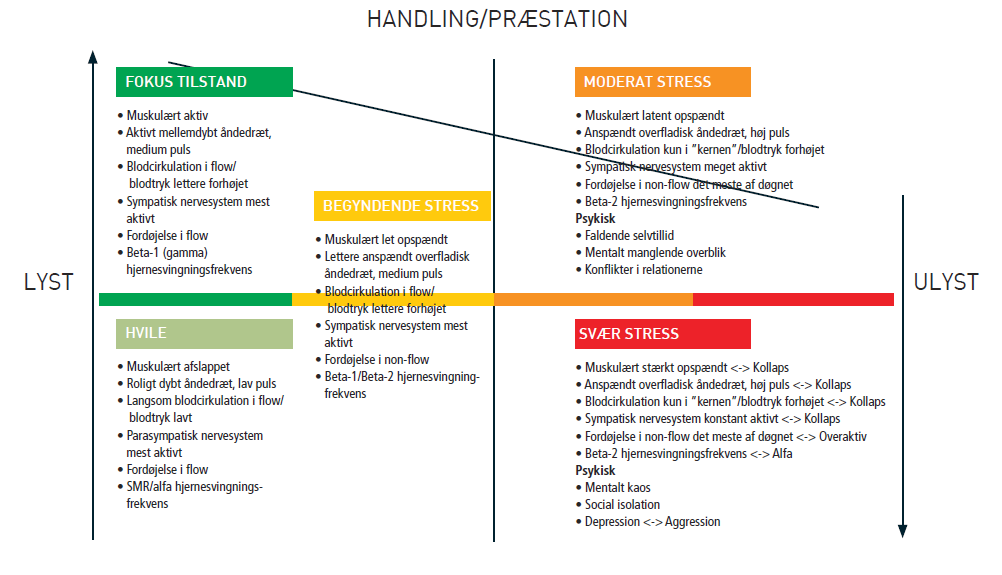
The number one rule of stress management, when you are severely stressed, is - for a time - to remove the stressor (if possible). That is, if it is primarily work life that is the "culprit", then it often ends with a period of sick leave for a shorter or longer period, simply to get the necessary rest and time to work with yourself, get in balance and replenish your resources again.
However, sick leave is not always necessary or optimal. And if the primary stressor is pain in combination with, for example, a bad relationship, children, a house, and a job to take care of, then it is somewhat more complex.
2. Physical symptoms
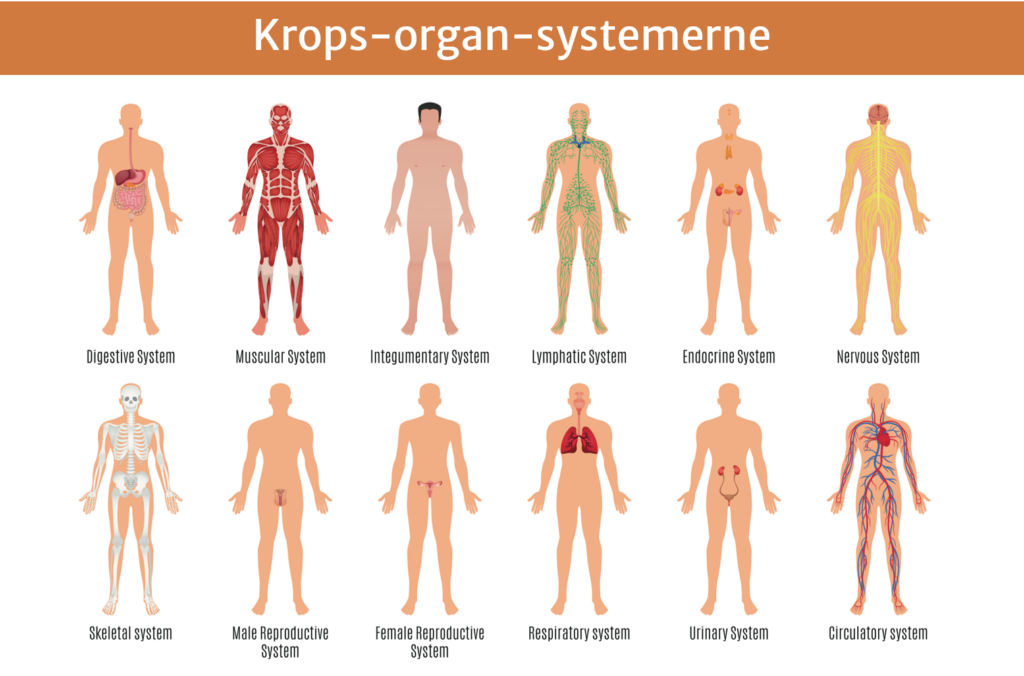
Once you have placed yourself on the continuum, try to mark in which body systems you primarily experience stress. What physical symptoms do you experience? Pay particular attention to whether your muscles are generally tense and whether your breathing is affected. What about sleep? Is it good enough and are you getting enough sleep?
3. Mental symptoms
Are you experiencing any mental symptoms? These may include, in particular, memory problems, difficulty concentrating, worrying, self-criticism, or racing thoughts.
4. Feelings
Try also to note which emotions are the most dominant during the day. Do you feel joy and curiosity, or do you suddenly become angry and short-tempered? You may also feel depressed and sad or feel more like you are 'numb' or 'emotionless'.
5. Actions, behaviors, and "to-do’s"
Try to reflect on how many "to-do’s" you put into normal everyday life (actions). Have you become a 'human doing', i.e. a human robot that needs to be as efficient as possible all the time? Do you remember your quality breaks? Or are you spending too many hours in front of one or more screens?
Try to reflect on your lifestyle. What is your diet like? Do you smoke? What are your drinking habits in terms of stimulants such as alcohol, coffee, and sugary drinks? Do you exercise in appropriate amounts and to the right effect? What other actions trigger your physical and mental symptoms and negative emotions?

