
Yoga for pain management
Before we proceed to this week's mindfulness and yoga exercises, we will briefly explain how you can use yoga for pain management.
Even many hours on the yoga mat will not be able to eliminate the cause of chronic pain. Therefore, yoga should not be seen as a treatment for the pain, but rather as a way to work with everything that can make the pain worse than it needs to be.
When it comes to yoga for pain management, we can use yoga to work on:
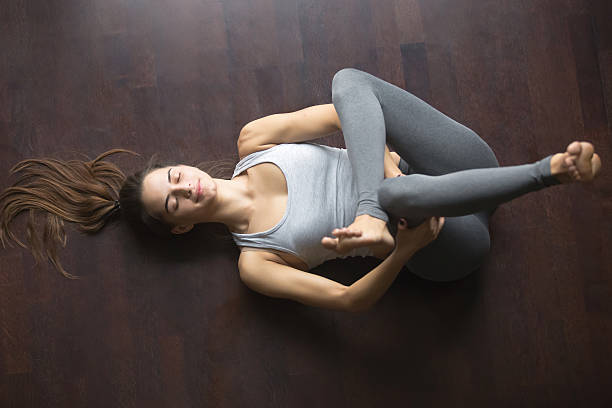
- Increased body awareness – interoception
- Relaxation and relief of secondary pain
- Calming the nervous system
- How we relate to the pain
Increased body awareness – interoception
When experiencing chronic pain, we often try to avoid the pain by focusing on something else. However, when we ignore the signals and information that our body sends us for a long period of time, we become much less sensitive to sensations in the body and miss out on important information.
Yoga for pain management is therefore also about increasing body awareness so that we can once again feel sensations in the body. It can provide information when we reach our limits or need to relax. At the same time, we tune in to what we sense to enhance our ability to distinguish between what benefits the body and what worsens the pain.
Ultimately, it is about becoming familiar with your body's resources so that you can balance and prioritize in your daily life, allowing pain to have the least control possible and enabling you to do more of what you find valuable.
Relaxation and relief of secondary pain
When we feel pain, it is a natural reaction to tense up our body and close our body around the pain and keep still.
But, you can actually make things worse by tensing up and avoiding physical activity because muscles and joints become stiffer, breathing becomes more restricted and the body has a harder time relaxing. You risk creating more pain in an instinctive attempt to take care of your body.
Yoga does the opposite of what the body instinctively and naturally does when we feel pain. Yoga supports letting go and creates softness and movement so that through stretching and flexibility we can reduce the secondary pain that comes from tension in the body.
Calming the nervous system
When you practice yoga, you affect your nervous system. The physical yoga moves, breathing, relaxation, and meditation activate the parasympathetic nervous system, the part of the nervous system that helps the body calm down and recover.
Breathing and the nervous system in particular are closely connected via the vagus nerve, which connects the brain and body. Calm, deep, and relaxed breathing with long exhalations can stimulate the vagus nerve, which calms and relaxes the nervous system.
How we relate to the pain
Through yoga, we also work on how we relate to pain so that we avoid identifying with the pain and instead learn to better accommodate and accept it.
We train some inner qualities when we practice yoga. As with mindfulness training, it is about the way we are present with what we experience and feel, without judging whether it is good or bad, right or wrong, and without bringing the past or future into the picture.
This training supports acceptance and reduces resistance to what is going on in the body and mind. We cannot eliminate pain, but we can reduce suffering and increase the quality of life by changing the way we relate to pain.

