
Summary of the course
We have now come to the last session of the MY-ENDO program, which we have chosen to call "A good life with endometriosis", and it is time to take stock of what the program has meant for your life.
Through the program, you have worked to improve your own management of endometriosis and the physical, psychological, and social consequences that the disease can cause.
Before you started

Before you started the program, we asked you to write about what you experienced as the biggest challenge or problem with endometriosis at the time, what motivated you to participate in the MY-ENDO program, what your wishes for the program were, and what you would do differently if endometriosis was not part of your life.
Take a moment to find that note again - and if you cannot find it, think back to what you wrote.
Do you still experience the same challenges with your endometriosis? Have the challenges become smaller/fewer?
Have you fulfilled any of the wishes you had for the process?
Have you started doing things differently in your life as a result of this program?
Session 1 - Endometriosis
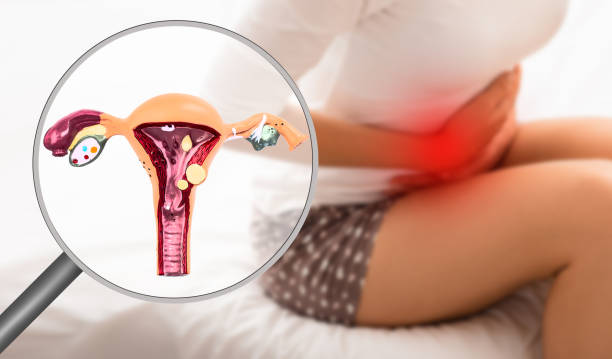
The first part of the session covered knowledge of endometriosis, how it develops, where it is located, what symptoms and consequences it may cause, how it is diagnosed, and knowledge about traditional and complementary treatment options.
The second part was about managing endometriosis, including an introduction to what mindfulness is and the connections between body, thoughts, feelings, and behavior, the connection between mindfulness and brain activity, and how to practice mindfulness.
The practical exercises in session 1 consisted of the mindfulness exercise called body scan and the yoga exercises from the yoga series called "Calm".
Session 2 - Pain

The first part covered knowledge about pain, how it can be measured and described, why we experience pain, the expression of pain, pain mechanisms, development from acute to chronic pain, pain mechanisms in the abdomen, endometriosis pain, the misconception of "psychological" pain and psychological consequences of pain.
The second part covered pain management, interdisciplinary pain management, the difference between pain and suffering, the importance of expectations and attention, the effects of psychological pain management in endometriosis, interoception - sensing inner sensations, feelings, thoughts, and bodily tension, and yoga for pain management.
The practical exercises consisted of the mindfulness exercise body scan - either a long or short one - and the yoga exercises from the yoga series called "Hips and Abdomen".
Session 3 - Stress

The first part of session 3 covered knowledge of stress, stress from health to disease, recovery, stress on a continuum, stress and chronic pain, and stress and the body's systems.
The second part covered stress management, a stress management overview, stress prevention, and stress management using the breath.
The practical exercises consisted of mindfulness exercises with a focus on the breath and the body scan - either a long or short one - and the yoga exercises from the yoga series called "Calm and Light Activation".
Session 4 - Thoughts and feelings

The first part of session 4 covered knowledge of thoughts and emotions, including anxiety, uncertainty, sadness, depression, anger, and worry.
The second part dealt with managing thoughts and emotions, letting thoughts and emotions be, from inner to outer focus, autopilot and automatic thoughts, and being with difficult thoughts and emotions.
The practical exercises consisted of mindfulness exercises focusing on awareness and as well as breathing meditation and body scan. The yoga exercises focused on repetition.
Session 5 - Grief

The first part of session 5 covered knowledge of grief and the four grief tasks.
The second part focused on managing grief using a grief writing exercise.
The practical exercises consisted of a mindfulness exercise with a focus on repetition and the yoga exercises consisted of exercises from the yoga series called "Sun Salutation".
Session 6 - Identity and meaning
The first part of session 6 covered knowledge of identity and meaning, the basic existential terms of life, and the basic existential terms of endometriosis.
The second part dealt with managing identity and meaning, with an introduction to values and the values compass.
The practical exercises consisted of mindfulness and yoga exercises with a focus on repetition.
Session 7 - Everyday life and relationships

The first part of session 7 dealt with the knowledge of everyday life and relationships and included a description of everyday life, work and education, family, friends, children, relationships, sexual life, fertility, and the desire for children.
The second part dealt with managing everyday life and relationships by identifying your values within the life area of everyday life and relationships.
The practical exercises consisted of mindfulness exercises focusing on compassion and self-compassion and yoga exercises focusing on repetition.
Session 8 - Health, diet, and exercise

The first part of session 8 covered knowledge of health, diet, and exercise, what lifestyle factors influence our health, diet and endometriosis, and exercise and endometriosis.
The second part covered managing health, diet, and exercise, mindfulness in everyday life, mindful eating, mindful bathing, mindful exercise and movement, and identifying your values within the life areas of health and well-being.
The practical exercises consisted of mindfulness exercises focusing on mindfulness in everyday life as well as exploring new yoga exercises or practicing yoga outside.
Session 9 - Values-based action

The first part of session 8 covered knowledge of values-based action, from values to goals to action, small steps, and impossible goals.
The second part was about managing values-based action, where you had to work on the values compass and set goals and committed actions.
The practical exercises consisted of optional mindfulness and yoga exercises.

