
Stress management through breathing
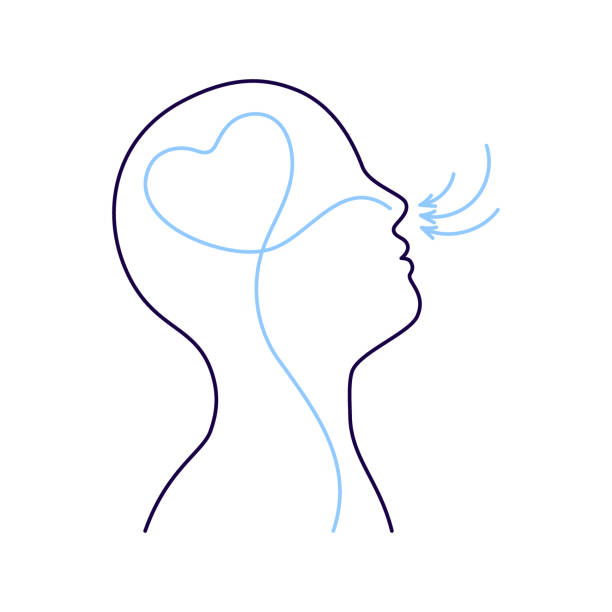
Another important part of stress management is to focus on your breathing. Therefore, breathing and how you can use breathing for stress management is discussed in more detail below.
The breath
The whole point of a well-functioning and normal breath is quite simple: an optimal utilization of the oxygen we take in during inhalation and an optimal excretion of carbon dioxide during exhalation. In addition, breathing is a direct key to influencing the autonomic nervous system, which controls blood pressure, heart rate, and hormonal balance in the body.
Breathing is the entire foundation of life. It is the bridge between body and mind, between conscious and unconscious. It is the best tool to use to regulate the body, thoughts, and emotions.
The development of the breath - and awareness of the breath - is also one of the most important keys to a deepened mindfulness and meditation practice. Breathing techniques help to focus mentally and, in the yoga tradition, are an essential preparation and aid to the practice of meditation.
Connecting body and mind
The breath is our clearest point of connection between body and mind. The breath mirrors the activity of the mind; every emotion and state of consciousness is reflected in the breath. As an example, anxiety immediately sets in as a held breath with limited possibility to exhale. Anger produces a faster and more staccato-held breath. Joy - and especially laughter - gives a perfect breath, where you fill your lungs completely - and exhale completely. Especially when you are almost choked with laughter, the abdominal cavity contracts, and the lungs empty completely. A sleeping person has a deeper breath with a slight hissing in the throat. You can tell how deeply the person is sleeping just by listening to their breathing. When the mind is very active and thoughts are racing, the breathing will speed up and vice versa.
Breathing can also affect the activity of the nervous system. For example, it is known that a long and calm exhalation can activate the parasympathetic nervous system via the vagus nerve, i.e. the part of the nervous system that helps to calm the body and ensure that it returns to its natural balance. In other words, we can use breathing to influence the nervous system and reduce stress!
Most people observe how their breathing changes during mindfulness meditation. Usually towards a slower breath, but if a lot of stress is released, the speed can also increase. If you find that the body suddenly breathes in deeply after the breath has been stopped for some time, it may be a sign that you have been in 'the gap'.
The development of awareness of the breath and the development of the breath is one of the most important keys to a deepened meditation practice and to well-being in general. In addition, there are a number of meditation techniques based on breathing.
Normal breathing
Normal breathing is something that young children and animals do automatically, but most young people and adults only breathe shallowly most of the time. Tension, stress, and emotional states can 'sit' in the body and may restrict breathing in a way where you rarely breathe normally. Therefore, it may be necessary to consciously practice normal breathing in order to return to it as a habit in the body.
Deep breathing
Full and deep breathing, also known as perfect breathing, is important to do a number of times each day so that the lungs are completely emptied of "old air" and new fresh air can be drawn in. This normally happens by itself several times in an hour, but if we are under pressure or stress, we may inhibit this reflex. Therefore, if it does not happen by itself, it is important to consciously do it as a dedicated exercise.
Other ways of breathing
We can do a number of things to develop our breathing. It can be divided into enduring, strengthening, healing, or relieving breath, and more specific breathing techniques can be used body therapeutically for emotional release.
In this course, however, we will focus primarily on normal and deep breathing.
Mindful self-observation of the breath
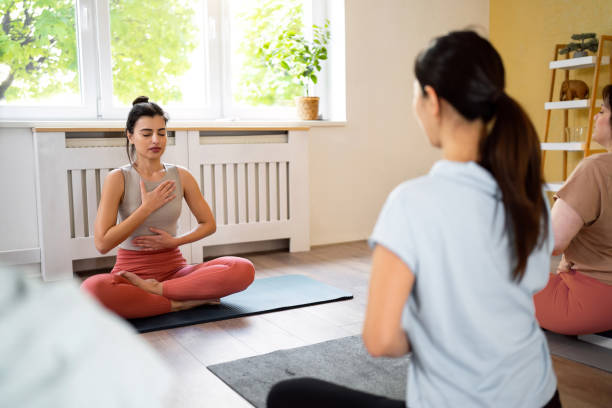
When we perform meditative breathing exercises one of the most important keys in order to be able to move your state of consciousness exactly where you want it, is the knowledge of the connection between the tension/relaxation of the abdominal cavity and the balance of the autonomic nervous system.
Be aware that on inhalation you activate the sympathetic nervous system that is, the part of the nervous system that raises energy. On exhalation, you activate the parasympathetic nervous system, which means the part of the nervous system that provides calm and centering. These activations happen through the vagus nerve.
Once you have learned to use breathing techniques to activate the parasympathetic nervous system, you can guide yourself into a more relaxed state at any time, even if you wake up at night with pain, thought overload, or heart racing - and want to go back to sleep.

