
Worries
As humans, we have the ability to think backward and engage in thoughts about the past, for example when trying to complete unfinished tasks. We also have the ability to think forward in time and plan or strive for goals in the future.
The ability to think forward and backward in time can be used to learn from the past and previous experiences if we use it consciously. If, on the other hand, our minds are uncritically and unconsciously occupied with thoughts of worry and speculation about the past and future, it can make us depressed, angry, anxious, stressed, or exhausted.
We all worry about everyday things. This is perfectly normal and for most people, it is not something that causes problems. However, when worry and speculation take over, we find it difficult to be present and stay present, which can result in limiting our ability to perform ordinary everyday tasks or do our jobs.
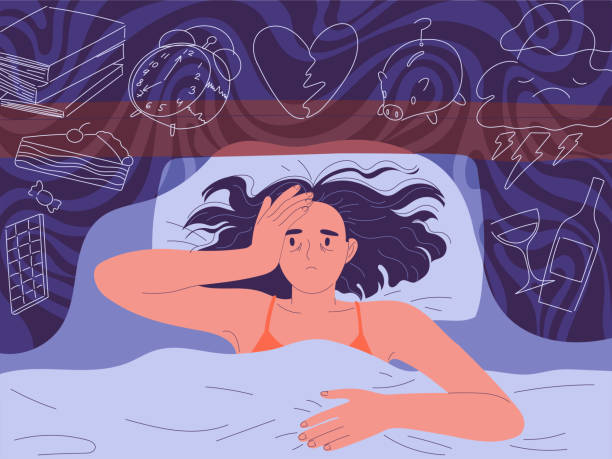
Worries can be about something specific, such as whether I should choose to have surgery to remove my uterus and ovaries. In this case, I may list the pros and cons in order to finally make a choice and take action. This means that it is a worry where it is possible to do something, after which the worry will often disappear again.
But many worries are vague. It can be worries about the future, for example, what will happen to me? Will I continue to be able to hold down a job? Will I be able to have children? These are worries that do not relate to specific current problems. It is the brain that imagines a problem, but not a real problem that can be solved here and now, i.e. not a worry where it is possible to do something, to act. And since the body reacts in the same way to imagined problems and threats as it does to real problems and threats, the entire stress system, anxiety, and depression can be activated in this situation.
Managing worries
In these cases, it is important to look at what to do with your worries. The brain is designed to keep searching for solutions and answers - even if there are no answers to be found. This means that the worries, speculations, and ruminations will grow and grow and become a constant stream of thoughts.
Often it ends up not being the original thought or problem (How will it work out for me? Will I continue to be able to hold down a job? Will I be able to have children?) that is the real problem reducing the quality of life. Instead, it is the amount of worrying and the time spent on worry and rumination that has become the biggest problem.
Sometimes we talk to women who spend 8, 10, or even 12 hours a day speculating and worrying about the thought/problem without getting any closer to a solution. It is now more the amount of time lost on speculation, rumination, and looking for solutions and answers that has become the real problem and the reason why you can no longer be present and do your job.
Instead of trying to predict the future and trying to answer the question of how things will turn out, we will start to train our attention to be able to shift our attention from internal events (thoughts, feelings, and body sensations) to external events (what we see, hear around us, etc.). We will also work on the capability to look at our thoughts and feelings from a higher perspective - a meta-perspective - where we look at thoughts and feelings as something we have, not something we are, and as something that comes and goes and is constantly changing. Therefore, this week, you will be presented with four short mindfulness exercises focusing on managing thoughts and emotions that you can choose from.

