
Leaving thoughts and emotions alone...

But! Why should I learn to let go of thoughts and emotions when all I want is to get rid of them?
No matter how much we want it or how much we try to control it, we cannot control what bodily sensations, thoughts, or emotions our brain and nervous system send us. In other words, we cannot control the content of our thoughts or when and how often they appear, just like we cannot control what emotions we feel right now or what physical sensations we feel in our bodies.

We often use a cell phone as a metaphor for this. We can ask ourselves: When the phone rings, is it then possible to control who is calling? - No, it is not. On the other hand, we can choose whether we want to answer the phone - that is, whether we want to "enter" the thought or feeling, or whether we want to let the phone "ring", or leave the thought or feeling alone.
When we "let the phone ring" instead of answering it often what happens is that those on the other end, who are trying to get our attention, to get in touch with us, eventually give up and stop calling.
The same can happen with thoughts and emotions. When we leave thoughts alone, i.e. do not go with the thoughts - think about them and move on - we are telling the brain that they are not important and that there is no need to send those thoughts again. If, on the other hand, we go with the thoughts and into the thought or emotion, we tell the brain that they are important to deal with and then the brain continues to send the same thoughts and feelings to us.
VIDEO: The window metaphor Vinduesmetaforen (unfortunately, this video has not been recorded yet)
Train of thought
Scientists believe that we think somewhere between 30,000-70,000 thoughts per day. However, most of these thoughts don't even make it to our minds before they disappear, and a large proportion of these thoughts are "repetitive thoughts", i.e. thoughts we have had many times before.
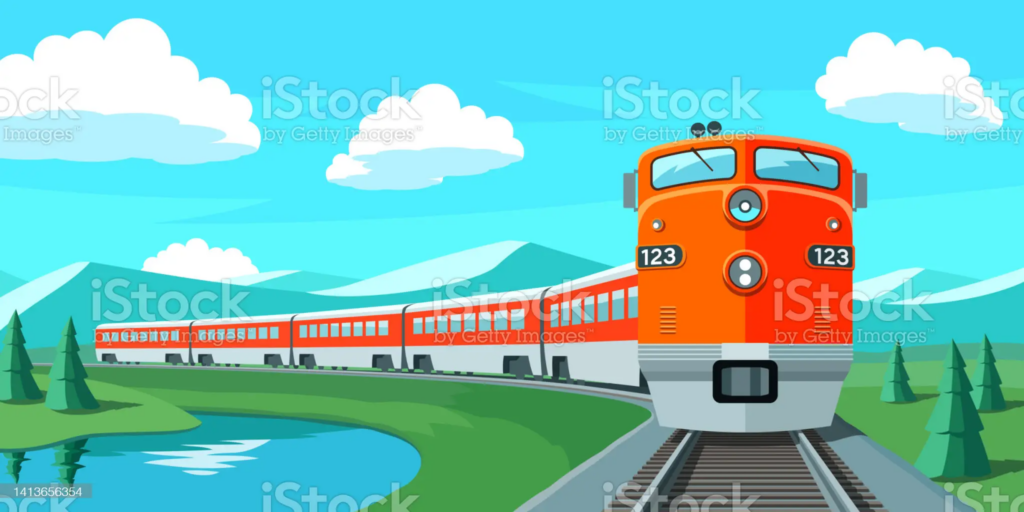
You can try to imagine that your head is like a train station for "thought trains". Some trains will just drive through, and you barely have time to see what is coming before they are gone. Other trains will loop and pass by again and again, while yet other trains will stop at the station and allow you to board and examine what the train is carrying.
This is where you enter the thought (or feeling). You might walk through the train and examine all the seats, and you might choose to let yourself be led into the next train car and the next train car and the next train car and the next train car, and so on. This becomes a metaphor for how you get lost in your thoughts, where one worry can lead to the next worry.
And what do you do when you cannot stop the worrying?
It is all about leaving the train and getting back to the station. Or better yet, train yourself not to board the train at all, but to leave it alone. It can stay on the station for as long as it wants, but if we leave it alone, it will eventually move on by itself - WITHOUT us being on board! In practical terms, it is as simple as not letting the thought or feeling make contact or capture your attention, but shifting your attention elsewhere. And you are already well on your way to practicing this.

